
7 Key Benefits of Sports Massage for Athletes in 2025
Beyond the Finish Line: How Sports massage Unlocks Your True Potential
For every dedicated athlete and active individual, hitting a performance plateau or being sidelined by nagging soreness is a familiar frustration. You follow a strict training regimen, dial in your nutrition, and prioritize sleep, yet something is still missing. This is where a crucial, often-overlooked component of elite athletic care comes in: sports massage.
Far from being a mere post-workout luxury, sports massage is a science-backed therapeutic tool designed to optimize your body's recovery systems, enhance physical capabilities, and build resilience against injury. The benefits of sports massage extend far beyond simple relaxation, directly impacting your physical readiness and competitive output. This is not about a gentle spa treatment; it is targeted manual therapy designed for athletic bodies.
This article moves beyond generic advice to provide a detailed roundup of the seven most impactful benefits. We will explore the physiological mechanisms behind each, offering practical, actionable insights and real-world examples. Prepare to learn how to integrate this powerful modality into your routine to reduce soreness, improve flexibility, and unlock new levels of performance and recovery.
1. Enhanced Muscle Recovery and Reduced Soreness
One of the most celebrated benefits of sports massage is its profound impact on accelerating muscle recovery and alleviating post-exercise soreness. After a strenuous workout, your muscles are filled with micro-tears and metabolic byproducts, such as lactic acid and inflammatory markers, leading to the familiar ache of delayed onset muscle soreness (DOMS). Sports massage directly targets this issue by systematically flushing these waste products from your tissues.
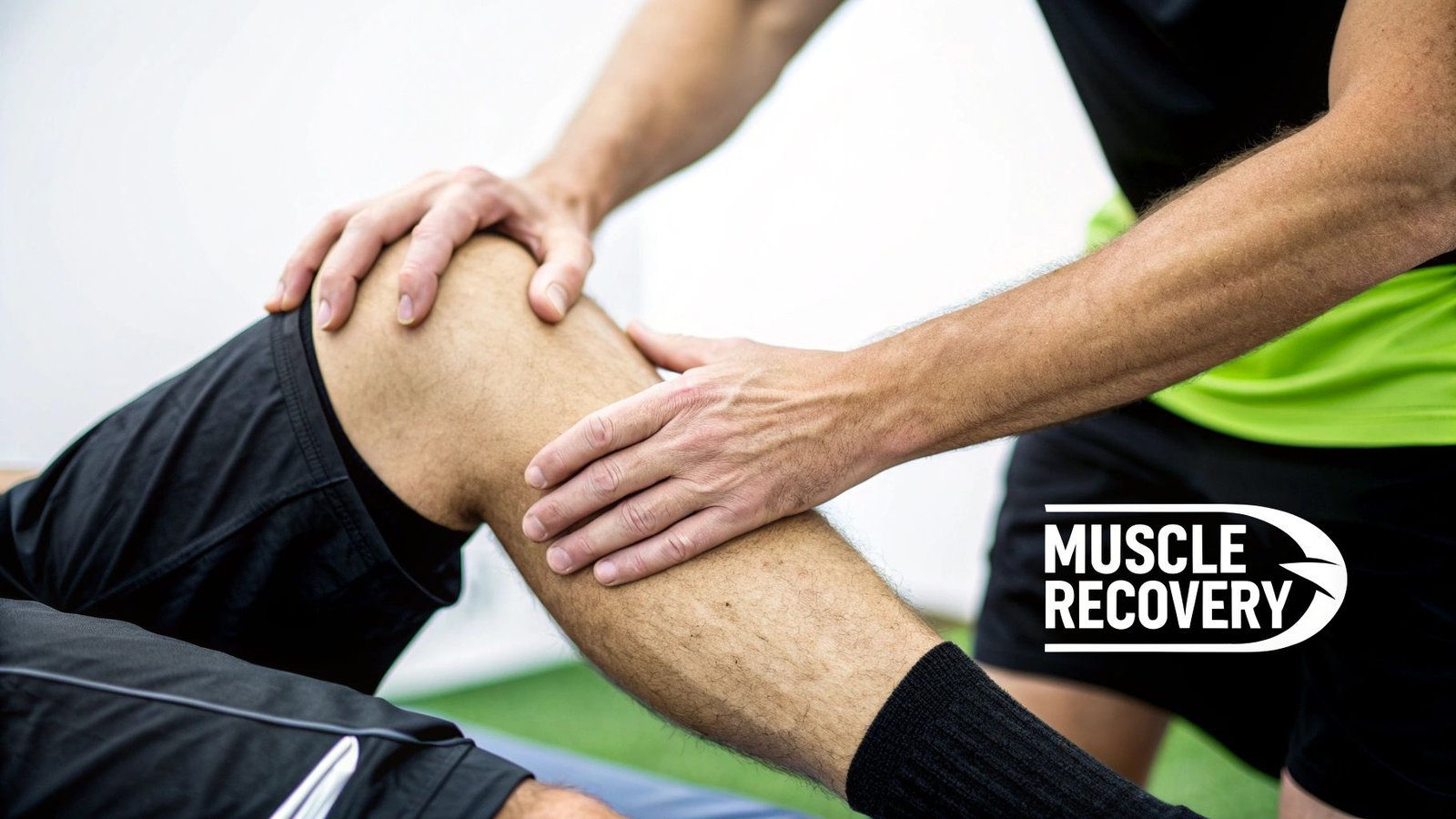
The therapy works through a two-fold mechanical process. First, it enhances blood circulation, delivering a fresh supply of oxygen and nutrient-rich blood to the fatigued muscles, which is critical for repair and regeneration. Second, it stimulates the lymphatic system, your body's natural drainage network, to more efficiently clear out the inflammatory substances causing pain and stiffness. This powerful combination is a key reason sports massage is considered a recovery game-changer, helping you feel better, faster.
Real-World Implementation
This isn't just theory; it's standard practice at the elite level. NBA teams like the Golden State Warriors have dedicated massage therapists to aid post-game recovery, ensuring players are ready for the next contest. Similarly, Olympic training centers and professional cycling teams integrate massage between grueling stages of multi-day races to maintain performance and prevent cumulative fatigue from derailing their athletes.
Actionable Tips for Optimal Recovery
To get the most out of your recovery massage, consider these practical steps:
- Timing is Key: Schedule your session within 2-4 hours post-exercise. This "golden window" allows you to flush out metabolic waste before it fully sets in, significantly reducing the severity of DOMS.
- Combine with Other Pillars: Massage works best as part of a holistic recovery strategy. Follow up your session with proper hydration to help the lymphatic system process the flushed toxins and a protein-rich meal to provide muscles with the building blocks they need to repair.
- Adjust Pressure: For acute soreness right after a workout, request lighter, flushing strokes. Deeper, more intense pressure should be reserved for 24-48 hours later, once the initial inflammation has subsided.
2. Improved Flexibility and Range of Motion
Beyond just feeling good, a critical benefit of sports massage is its ability to significantly enhance your flexibility and functional range of motion. Over time, intense training and repetitive movements lead to the development of adhesions, or tiny scar tissue knots, within your muscles and the surrounding connective tissue called fascia. These restrictions limit how far your muscles can stretch, hindering movement and athletic potential.
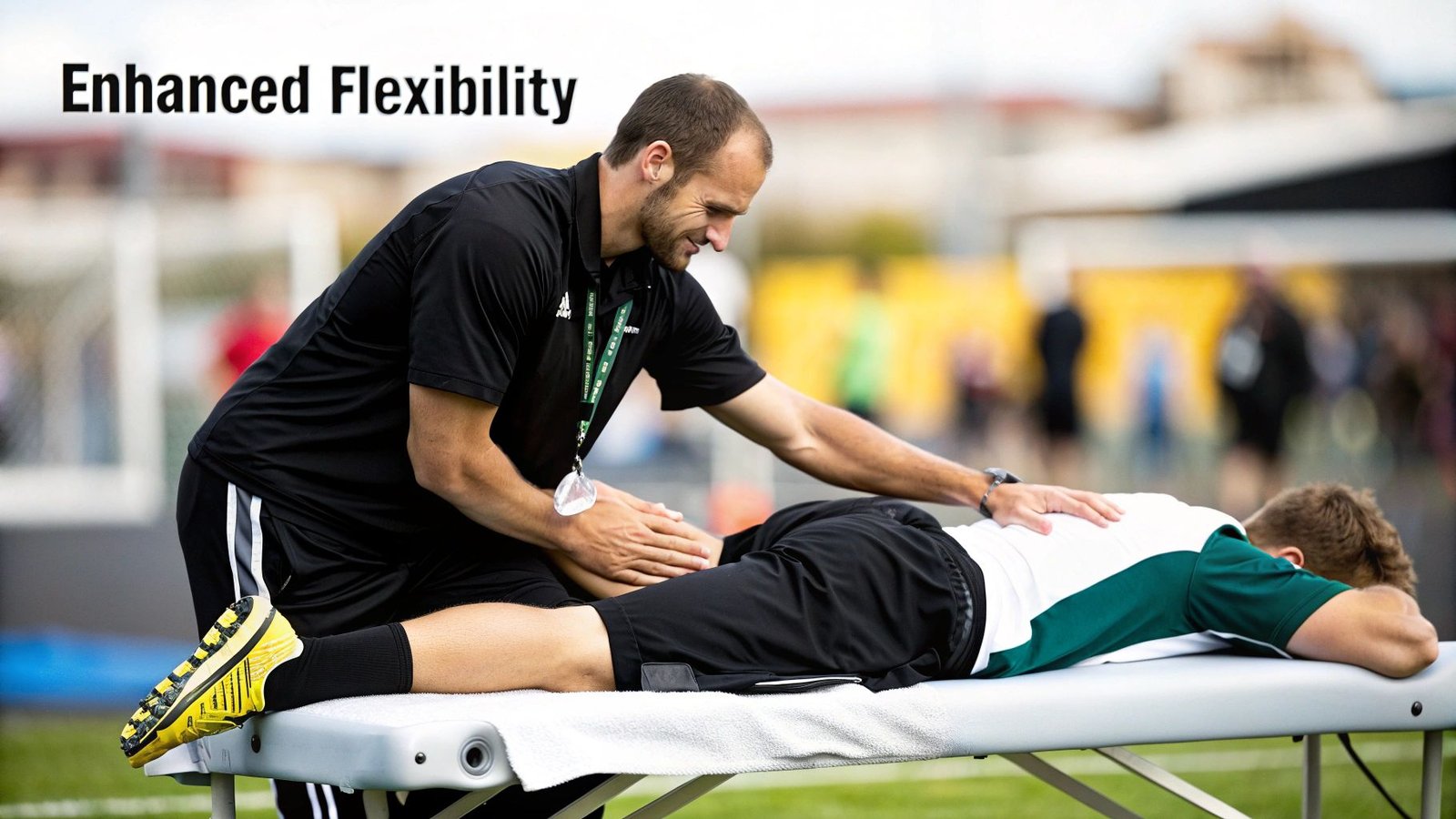
Sports massage directly confronts this by using specialized techniques like stripping, friction, and stretching to physically break down these tough adhesions. This process realigns tissue fibers and releases built-up tension, restoring elasticity to the muscles and fascia. The result is a noticeable improvement in joint mobility, allowing you to move more freely and efficiently. This increased range of motion is not just about comfort; it directly translates to a more powerful golf swing, a deeper squat, or a longer stride.
Real-World Implementation
This principle is fundamental in sports where mobility is paramount. Elite gymnastics programs and professional dance companies integrate regular massage to help their athletes maintain the extreme flexibility required for peak performance, especially in the hips and spine. Similarly, tennis players and baseball pitchers receive targeted massage on their shoulders and thoracic spine. This work helps unlock greater rotational power for serves and throws while reducing the risk of career-threatening injuries caused by restricted movement.
Actionable Tips for Optimal Flexibility
To maximize the flexibility gains from your massage, incorporate these strategies:
- Focus on Sport-Specific Patterns: Communicate with your therapist about the primary movements in your sport. A cyclist will need focus on hip flexors and hamstrings, while a swimmer may need more work on their lats and shoulders.
- Combine with Active Stretching: Immediately following a massage, when your muscles are most pliable, perform dynamic or active stretches to help "lock in" the new range of motion you’ve achieved.
- Use Heat Beforehand: Applying a warm compress for 10-15 minutes before your session can increase blood flow and warm the muscle tissue, making it more receptive to deep manipulation and stretching.
- Maintain with Self-Massage: Use tools like a foam roller or massage ball between professional sessions to address tight spots as they arise, preventing new adhesions from solidifying.
3. Injury Prevention and Early Problem Detection
Beyond recovery, one of the most crucial benefits of sports massage is its role as a proactive tool for injury prevention. A skilled therapist acts as a biomechanical detective, using their hands to identify subtle dysfunctions like muscle imbalances, excessive tension, and areas of restricted movement long before they manifest as pain or a full-blown injury. This early detection is critical for maintaining long-term athletic health.
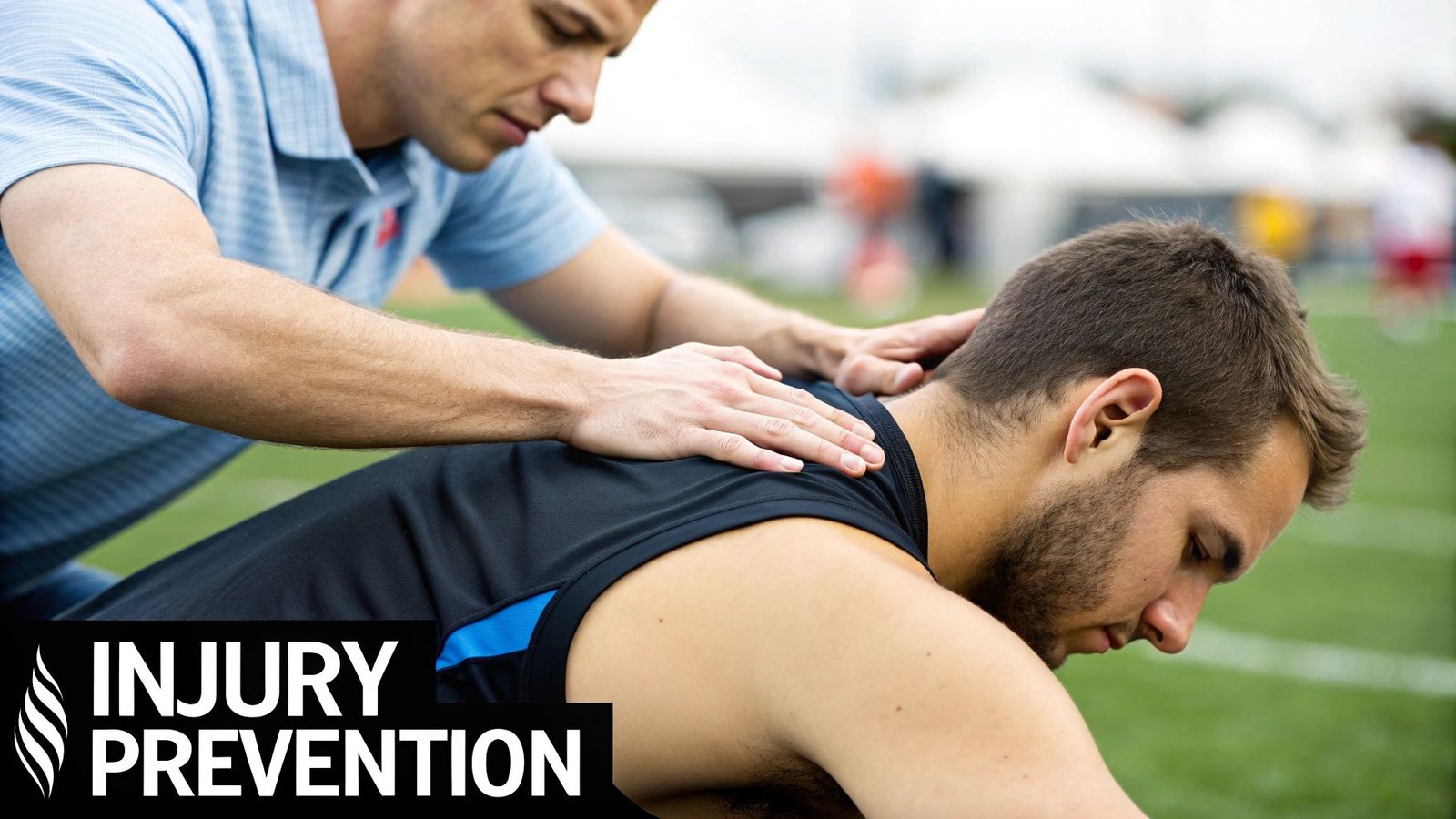
The process works through hands-on assessment, providing tactile feedback that can’t be replicated by technology alone. The therapist can feel developing adhesions, trigger points, and fascial restrictions that often precede common overuse injuries. By breaking down these fibrous knots and restoring pliability to the tissues, the massage helps maintain proper biomechanical function and significantly reduces the risk of a minor issue escalating. This diagnostic capability is one of the primary distinctions setting it apart from other massage types.
Real-World Implementation
This preventative approach is standard operating procedure in professional sports medicine. Marathon runners, for instance, receive targeted work on their hips and legs to identify and release the tightness that leads to IT band syndrome. Similarly, baseball pitchers rely on regular massage of the shoulder and rotator cuff to catch the early signs of impingement, while professional soccer players get frequent work on their hamstrings and calves to mitigate the constant risk of muscle strains.
Actionable Tips for Proactive Care
To leverage massage for injury prevention, shift your mindset from reactive to proactive:
- Schedule Maintenance: Integrate regular "maintenance" massages into your training plan, especially during high-volume periods. Don't wait until you feel pain; consistent sessions allow your therapist to monitor your body over time.
- Communicate Effectively: Be specific with your therapist. Mention any new, recurring, or unusual sensations you've experienced during workouts, no matter how minor they seem. This directs their assessment to potential trouble spots.
- Keep a Log: Track your training alongside your massage feedback. Noting patterns between intense workouts and specific areas of tightness can help you and your therapist predict and prevent issues.
- Address Findings Promptly: If your therapist identifies a problem, take it seriously. Follow through with their recommendations, which might include specific stretches, foam rolling, or corrective exercises to resolve the underlying issue.
4. Enhanced Circulation and Nutrient Delivery
A fundamental benefit of sports massage is its ability to significantly boost circulation. By physically manipulating muscle tissue, a massage therapist stimulates both blood and lymphatic flow. This process is like upgrading your body's internal delivery service, ensuring muscles receive a rich supply of oxygen and essential nutrients while efficiently removing metabolic waste products like lactic acid.
The magic lies in the mechanics. Long, gliding strokes (effleurage) and kneading techniques (petrissage) physically push deoxygenated blood and lymphatic fluid out of the muscle tissue and toward the heart. This action creates a pressure gradient that pulls fresh, oxygen-rich blood back into the muscles. This improved circulation supports better long-term cellular function, leading to faster healing from training-induced micro-trauma and optimal muscle performance.
Real-World Implementation
This principle is widely applied across different athletic disciplines. Endurance athletes, like marathon runners and cyclists, integrate regular massage to enhance oxygen delivery to their hard-working muscles during intense training blocks. In rehabilitation medicine, post-surgical athletes receive targeted massage to improve nutrient flow to the healing area, accelerating recovery. Even cold-weather athletes, such as competitive skiers, use massage to improve circulation in extremities that are often constricted by low temperatures, preventing injury and maintaining function.
Actionable Tips for Optimal Circulation
To maximize the circulatory benefits of sports massage, pair it with these strategic actions:
- Hydrate Strategically: Drink plenty of water before and after your session. Proper hydration makes your blood less viscous and supports the lymphatic system's ability to process and eliminate the metabolic byproducts released during the massage.
- Incorporate Contrast Therapy: Amplify the circulatory boost by using contrast therapy at home. Alternating between hot (vasodilation) and cold (vasoconstriction) applications, like a contrast shower on your legs, can further stimulate blood flow.
- Engage in Light Movement: A post-massage walk or some gentle dynamic stretching helps maintain the increased circulation. This low-intensity activity encourages the newly delivered nutrients to fully perfuse the muscle cells and prevents blood from pooling.
5. Stress Reduction and Mental Performance Enhancement
Beyond the physical realm, one of the most crucial benefits of sports massage is its ability to sharpen the mind and calm the nerves. High-stakes competition and intense training regimens generate significant mental and emotional stress. Sports massage provides a powerful antidote by triggering the release of feel-good endorphins while simultaneously reducing levels of the stress hormone cortisol, leading to a state of calm focus.
The therapy achieves this by activating the parasympathetic nervous system, your body's "rest and digest" mode, which counteracts the "fight or flight" response. This physiological shift promotes deep relaxation, improves sleep quality, and enhances mental clarity. By lowering cortisol and boosting mood-regulating neurotransmitters like serotonin and dopamine, massage directly tackles the biochemical roots of anxiety. This hormonal regulation is a primary reason athletes report feeling more focused and less anxious after a session, giving them a critical mental edge.
Real-World Implementation
This mental conditioning is a staple in professional sports. Precision athletes like professional golfers and archers rely on pre-tournament massage to manage the immense pressure and maintain steady hands and a clear mind. Olympic athletes often integrate massage into their pre-event rituals to calm nerves and visualize peak performance. Furthermore, many professional teams utilize massage not only for individual preparation but also to foster team bonding and a collective sense of calm before a crucial match.
Actionable Tips for Optimal Mental Focus
To leverage massage for your mental game, apply these targeted strategies:
- Create a Pre-Competition Ritual: Consistency is key for mental conditioning. Incorporate a short, focused massage into your pre-game routine to signal to your brain and body that it's time to focus.
- Sync Your Breath: Actively engage in deep, diaphragmatic breathing during your session. Inhaling and exhaling with the therapist’s strokes can profoundly deepen the relaxation response.
- Voice Your Mental State: Be open with your therapist about your stress levels. They can tailor the session’s techniques and pace to specifically address psychological tension, not just physical tightness.
- Separate Your Sessions: Use invigorating pre-event massage to prime for competition, but schedule longer, relaxing sessions on recovery days to target deep-seated stress reduction.
6. Improved Training Adaptation and Performance
Beyond immediate recovery, one of the most powerful benefits of sports massage is its ability to enhance long-term training adaptation. Consistent, high-quality training is the cornerstone of athletic improvement. Regular massage helps you achieve this by maintaining the health of your muscle tissue, reducing the cumulative fatigue that leads to overtraining, and preventing minor issues from becoming performance-limiting injuries.
This proactive approach allows your body to better handle and adapt to increasing training stress. By keeping muscles pliable, responsive, and free from restrictive adhesions or trigger points, you can execute movements with greater efficiency and power. This optimization ensures that each training session is more effective, leading to a superior supercompensation effect where your body rebuilds stronger than before. This concept is crucial for athletes looking to maximize their gains from every workout, as it directly translates to better, more consistent performance outcomes over time.
Real-World Implementation
This strategy is a staple in elite sports and is popularized by Olympic training programs and professional strength coaches. For example, powerlifters integrate massage to manage the immense stress on their muscles during heavy training blocks, ensuring tissue integrity for peak power output. Swimmers use it to maintain crucial shoulder mobility for more efficient stroke mechanics, while track and field athletes rely on it to optimize fast-twitch muscle fiber function for speed and explosive power.
Actionable Tips for Optimal Performance
To leverage massage for better training adaptation, consider these strategies:
- Align with Your Training Cycle: Integrate your massage schedule with your training periodization. Plan for deeper, restorative work during recovery weeks and lighter, preparatory sessions before key workouts or competitions.
- Focus on Sport-Specific Needs: Work with your therapist to target the primary muscle groups and movement patterns essential for your sport. A cyclist’s session focusing on the quadriceps and glutes will differ greatly from a tennis player’s session focused on the shoulder and torso.
- Adjust Intensity by Phase: The intensity of the massage should match your training phase. Use lighter, flushing techniques during high-volume periods to manage inflammation, reserving more intense, deep-tissue work for the off-season or dedicated recovery periods.
- Track Performance Metrics: Pay attention to your performance data, such as power output, speed, or even perceived exertion. Correlating this data with your massage schedule can help you identify the frequency and style that deliver the best results for you.
7. Faster Healing of Minor Injuries and Tissue Repair
Beyond simple recovery, one of the most significant benefits of sports massage is its ability to actively accelerate the healing of minor soft tissue injuries. When you suffer from a muscle strain, ligament sprain, or general tissue damage, sports massage can be a critical component of your rehabilitation plan, helping you return to activity faster and reducing the likelihood of re-injury.
The therapy directly influences the quality and speed of tissue repair. By increasing circulation to the injured area, it delivers the oxygen and nutrients necessary for rebuilding cells. More importantly, specific techniques like cross-friction massage help to break down and realign scar tissue. Unmanaged scar tissue (adhesions) can create weak, inflexible patches in the muscle that are prone to tearing again. By ensuring new collagen fibers form in a functional alignment, massage promotes strong, pliable tissue, which is essential for a full and robust recovery.
Real-World Implementation
This principle is a cornerstone of modern sports rehabilitation. Professional soccer players frequently receive targeted massage to manage hamstring strains, ensuring the repaired muscle is elastic and resilient. Similarly, tennis players rely on it for minor shoulder and elbow issues caused by repetitive stress, preventing micro-trauma from escalating into chronic conditions. For runners managing nagging injuries like plantar fasciitis or calf strains, massage is used to release tightness and break up painful adhesions, facilitating a quicker return to training.
Actionable Tips for Optimal Healing
To integrate massage into your injury recovery safely and effectively, follow these guidelines:
- Respect the Acute Phase: Wait at least 48-72 hours after an injury occurs before receiving massage on the affected area. This allows the initial inflammatory process, which is a necessary part of healing, to subside.
- Start Gently: Early-stage injury massage should use light, gentle strokes to improve circulation without disrupting the delicate new tissue. Techniques should be soothing, not aggressive.
- Integrate with Professional Advice: Massage should complement, not replace, medical treatment. Always follow the guidance of a doctor or physical therapist and use massage as part of a comprehensive plan that includes rest and appropriate exercises.
- Progress with Healing: As the tissue strengthens, your therapist can gradually increase the pressure and introduce deeper techniques like cross-friction to address scar tissue more directly.
Benefits Comparison of 7 Key Sports Massage Effects
| Aspect | Enhanced Muscle Recovery ⭐📊 | Improved Flexibility and Range of Motion ⭐📊 | Injury Prevention and Early Detection ⭐📊 | Enhanced Circulation and Nutrient Delivery ⭐📊 | Stress Reduction and Mental Performance ⚡💡 | Improved Training Adaptation and Performance ⭐⚡📊 | Faster Healing of Minor Injuries and Tissue Repair ⭐📊 |
|---|---|---|---|---|---|---|---|
| Implementation Complexity 🔄 | Moderate – requires regular skilled sessions | High – needs skilled practitioners and technique | High – demands experienced assessment practitioners | Moderate – standard techniques with monitoring | Moderate – quiet, controlled environment needed | Moderate to high – integration with training required | Moderate – timing and diagnosis critical |
| Resource Requirements ⚡ | Regular sessions, trained therapists | Skilled therapists, consistent maintenance | Highly skilled practitioners, ongoing sessions | Regular sessions, hydration and complementary care | Controlled environment, therapist trained in relaxation | Consistent therapy aligned with training schedules | Skilled practitioners, proper injury diagnosis |
| Expected Outcomes 📊 | Faster muscle recovery, reduced soreness | Increased flexibility & joint mobility | Early injury detection, reduced injury risk | Improved blood flow, faster healing | Reduced stress, better sleep and mental clarity | Enhanced performance, reduced fatigue accumulation | Accelerated healing, better tissue repair |
| Ideal Use Cases 💡 | Post-training/competition recovery | Sports requiring high flexibility (dance, gymnastics) | Athletes prone to overuse injuries | Endurance and rehabilitation focused athletes | Mental performance focus, stress management | High-intensity training programs | Minor injury recovery protocols |
| Key Advantages ⭐ | Non-invasive, drug-free, consistent recovery | Improves movement quality, reduces injury risk | Preventative care, maintains training consistency | Supports immune function, overall tissue health | Psychological benefits, reduces performance anxiety | Supports training load, improves consistency | Reduces chronic injury risk, maintains fitness |
Integrating Sports Massage Into Your Winning Strategy
As we have journeyed through the intricate ways sports massage impacts the body, a clear picture emerges. This practice is not a luxury reserved for post-competition indulgence; it is a fundamental pillar of any comprehensive athletic training program. The discussion has moved far beyond simple relaxation, revealing a powerful methodology for enhancing physical output, accelerating recovery, and building a more resilient athletic body. The compounding benefits of sports massage create a powerful advantage that can define the difference between a plateau and a personal best.
Viewing this therapy as an integral part of your routine, rather than a sporadic treat, is the first step toward unlocking its full potential. You meticulously plan your workouts, your nutrition, and your rest; your bodywork deserves the same strategic attention.
A Summary of Your Performance Edge
To consolidate the key takeaways, sports massage offers a multi-pronged approach to athletic excellence. By incorporating it into your regimen, you are actively pursuing:
- Accelerated Recovery: Significantly reducing delayed onset muscle soreness (DOMS) and flushing out metabolic waste.
- Superior Flexibility: Breaking down adhesions and increasing the elasticity of muscle tissue for a greater range of motion.
- Proactive Injury Prevention: Identifying and addressing muscular imbalances and trigger points before they escalate into serious problems.
- Optimized Circulation: Boosting the flow of oxygen and nutrient-rich blood to hard-working muscles for better function and repair.
- Sharpened Mental Acuity: Lowering cortisol levels and promoting a state of calm focus, which is crucial for high-stakes performance.
- Enhanced Performance: Allowing you to train harder and more frequently by improving your body’s ability to adapt to physical stress.
- Efficient Tissue Healing: Speeding up the rehabilitation process for minor strains and sprains by improving tissue quality.
Your Action Plan for Implementation
To translate this knowledge into tangible results, consistency is your most powerful ally. A single massage may feel good, but a consistent schedule creates cumulative and lasting change. Start by scheduling sessions during key phases of your training cycle, such as after a particularly grueling week or 2-3 days before a major event to ensure your muscles are primed.
Finding the right practitioner is just as crucial. Seek out a licensed massage therapist who specializes in sports therapy and demonstrates a deep anatomical knowledge relevant to your specific discipline. They should be a partner in your athletic journey, someone who understands your goals and can adapt their techniques to your evolving needs.
The Ultimate Payoff: More Than Just Recovery
Ultimately, investing in regular sports massage is an investment in your longevity as an athlete. It is a proactive strategy for maintaining your body’s peak operational capacity, allowing you to stay in the game longer and perform at a higher level. The true power of the benefits of sports massage is realized when it becomes a non-negotiable component of your winning strategy, safeguarding your body while consistently pushing the boundaries of what you can achieve.
For athletes in the Houston area seeking a premier wellness experience, finding a provider that combines expertise with a tranquil environment is essential for both physical and mental recovery. A facility like La Moon Massage and Facial is staffed by skilled therapists dedicated to the specialized techniques that deliver these powerful athletic benefits. Elevate your recovery and unlock your true potential by scheduling your specialized sports massage at La Moon Massage and Facial today.
← Back to all articles