
Trying to choose between a hot stone and a Swedish massage? It’s a common question, and the answer really boils down to what you want to get out of your session.
Think of it this way: Swedish massage is your go-to classic for full-body relaxation. It relies on a therapist's skilled hands to improve circulation and melt away general stress. On the other hand, hot stone massage brings in the element of heat, using warmed stones to sink deeper into the muscle tissue and release that really stubborn, deep-seated tension.
Hot Stone vs. Swedish Massage: A Quick Comparison
Booking a massage is an investment in your well-being, so you want to make sure the treatment matches your goals. Knowing the fundamental differences between these two popular styles is key to getting the most benefit, whether you're after gentle relief from a stressful week or need something more focused to work out the kinks.
Ultimately, the right choice depends on your personal needs and how the massage fits into a comprehensive self-care routine. One is all about broad, soothing strokes, while the other uses targeted thermal energy to get right to the source of muscle tightness.
Key Differences at a Glance
Let's break down the main distinctions in technique, the feel of the pressure, and what each massage is best suited for. This should help clarify which one is calling your name.
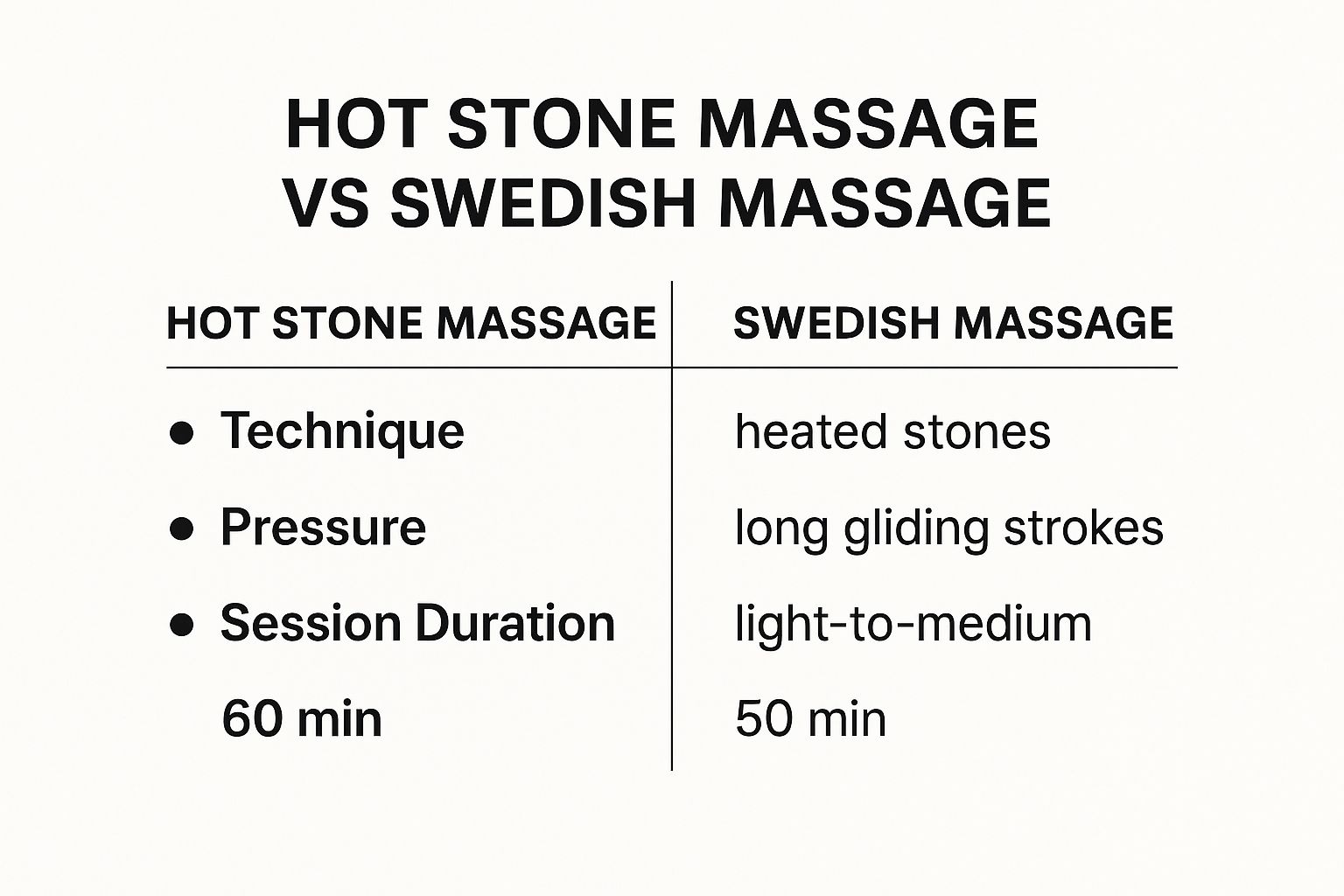
The image above gives you a great visual, showing that while both massages are deeply relaxing, a hot stone session often feels more intense due to the penetrating heat and may require a bit more time to perform thoroughly.
To make it even simpler, here’s a table that lays everything out side-by-side.
Hot Stone vs Swedish Massage At a Glance
This table offers a direct comparison of the core characteristics of hot stone and Swedish massage, helping you quickly identify the best fit for your needs.
| Feature | Swedish Massage | Hot Stone Massage |
|---|---|---|
| Primary Goal | General relaxation, stress reduction, and improved circulation. | Deep muscle relaxation, easing significant tension, and pain relief. |
| Core Technique | Long, gliding strokes (effleurage), kneading, friction, and tapping. | Heated, smooth stones placed on the body and used as massage tools. |
| Sensation | Soothing and rhythmic pressure from the therapist's hands. | Penetrating warmth combined with the weight and pressure of the stones. |
| Ideal For | First-timers, stress management, and overall full-body wellness. | Chronic pain, muscle stiffness, and anyone who loves heat therapy. |
Both of these styles are cornerstones of bodywork. You can explore more about the overarching goals of treatment by learning about https://blog.lamoondayspa.com/what-is-therapeutic-massage/ in our detailed guide. The real question to ask yourself is: do you need the gentle, restorative flow of a Swedish session, or are your muscles crying out for the deep, focused heat of hot stones?
Understanding the Classic Swedish Massage
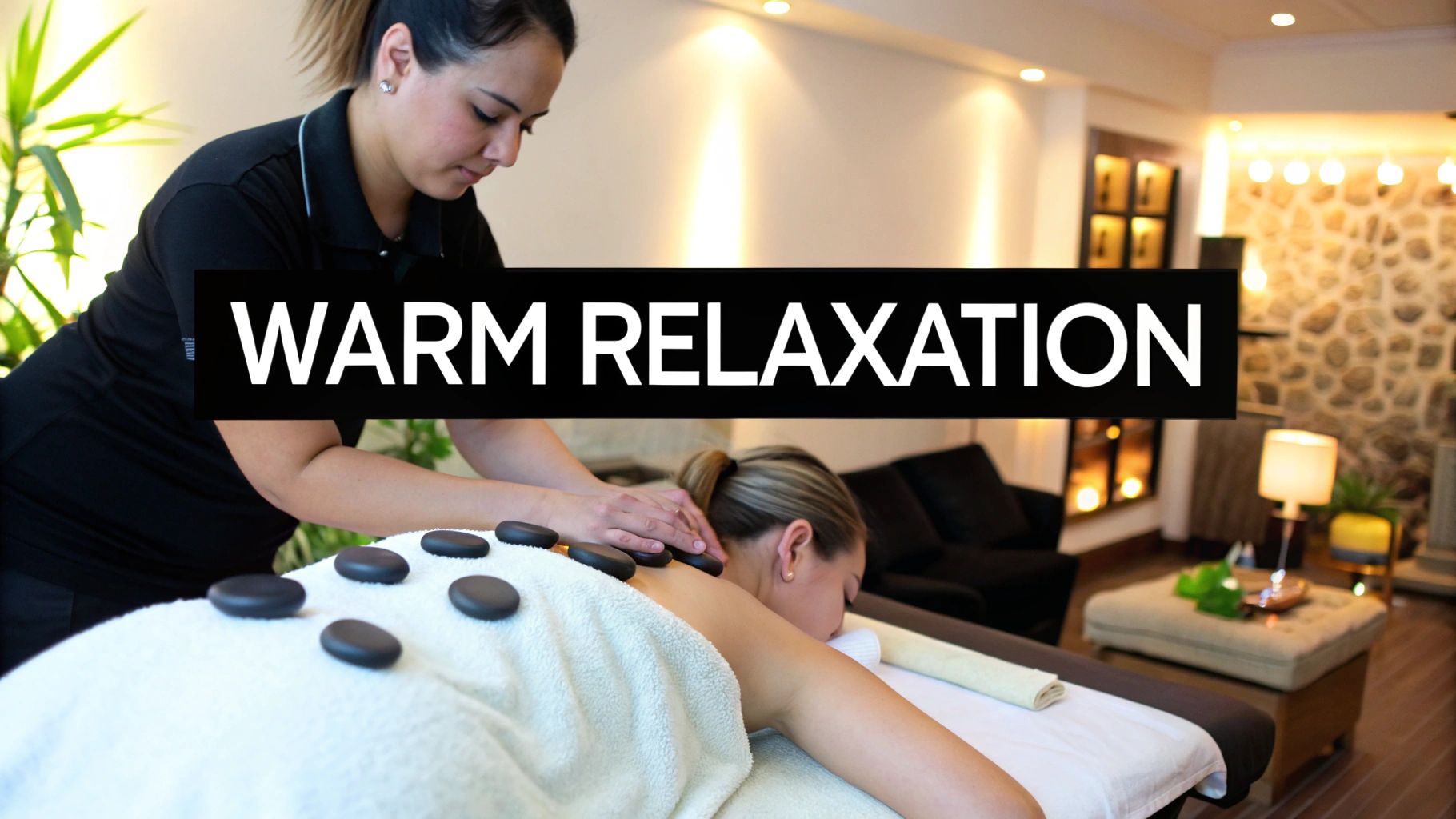
When you imagine a classic, full-body massage, you’re almost certainly picturing a Swedish massage. It’s the cornerstone of most Western massage therapies, having been developed back in the early 19th century. For many, it's the go-to choice for a first massage experience or for simply melting away everyday stress.
The entire session is built around a system of five core strokes. A skilled therapist weaves these movements together, creating a rhythmic and flowing session that treats the body as an interconnected whole. This is a key difference from a hot stone massage, which uses thermal energy to coax muscles into relaxing. Swedish massage, on the other hand, relies purely on the therapist's hands-on expertise to manipulate soft tissue.
The Five Foundational Strokes
To really get what makes Swedish massage so effective for general relaxation, you need to understand its building blocks. This also helps clarify its unique place in the hot stone massage vs Swedish massage comparison. Each stroke has a distinct job to do.
- Effleurage: Think of these as the long, smooth, gliding strokes that ease you into and out of the massage. With light to moderate pressure, effleurage warms up the muscle tissue, gets the blood moving, and calms the nervous system, setting the stage for deeper work.
- Petrissage: This is where the kneading, rolling, and lifting comes in. Petrissage targets those stubborn knots and tight spots, helping to flush out toxins and make muscles more pliable. It’s that satisfying feeling of a muscle being gently squeezed and released.
- Tapotement: A series of rhythmic, percussive taps using the edge of the hand, cupped hands, or fingertips. Don't let the name fool you—it’s surprisingly invigorating! These quick, stimulating movements are fantastic for waking up tired muscles and energizing the body.
- Friction: This involves deep, circular movements that create heat and work to break down adhesions, which we all know as "knots." This stroke is designed to get into the deeper layers of muscle where tension often gets stuck.
- Vibration: Using their hands or fingertips, the therapist applies a rapid shaking or trembling movement over a specific muscle group. Vibration is incredible for loosening up tight muscles and has a profoundly soothing effect on the nerves.
A key differentiator of Swedish massage is its focus on improving venous return—the flow of blood back to the heart. The sequence and direction of the strokes are intentionally designed to mirror the body's circulatory system, enhancing oxygen delivery to the muscles and promoting systemic relaxation.
By masterfully combining these five strokes, a therapist delivers a session that is both deeply relaxing and genuinely restorative. The gentle effleurage strokes quiet the mind, while petrissage and friction work out the physical kinks. This structured, hands-on approach is what makes it so effective for reducing muscle soreness, lowering stress hormones like cortisol, and leaving you feeling refreshed and centered. It's the gold standard for traditional therapeutic touch, defined by rhythm and flow rather than the penetrating heat of stones.
Exploring the Power of Hot Stone Therapy
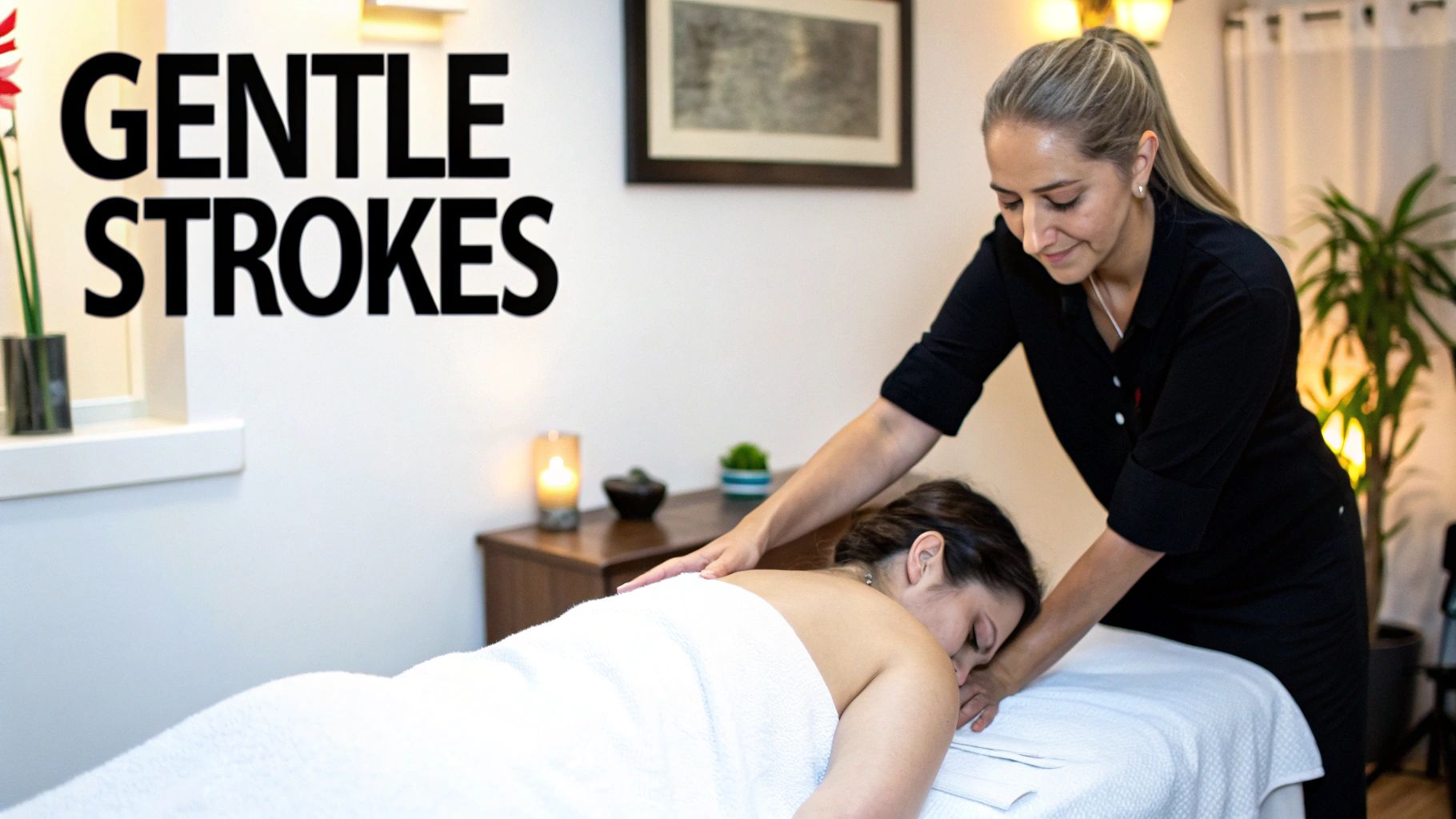
While a Swedish massage is built entirely on the therapist’s hands, a hot stone massage brings a powerful thermal element into the mix. This isn't just about placing warm rocks on your back for comfort; it’s a strategic therapy designed for deep, targeted muscle release.
The tools of the trade are smooth, heated basalt stones. This specific type of volcanic rock is fantastic at holding onto heat. During a session, these stones play two key roles. Some are placed on specific energy points—like along the spine or in the palms—to deliver a steady, penetrating warmth. Others become an extension of the therapist's hands, used to glide over your muscles and work out knots with the added benefit of heat.
The Science of Deep Heat
The real magic of hot stone therapy is how it softens muscle tissue before the hands-on work even begins. The warmth from the stones pulls more blood to the area, flooding it with oxygen and encouraging the healing process to kick in. This pre-warming means your therapist can get to the deeper layers of muscle tissue with much less pressure.
For anyone dealing with chronic knots or stubborn stiffness, this is a huge advantage. It allows the therapist to break down that deep-seated tension more effectively, and often with less discomfort than you might expect from a traditional deep tissue massage. The heat does the initial heavy lifting, making the muscles pliable and ready for detailed work.
A key takeaway in the hot stone massage vs Swedish massage debate is the dual benefit of hot stones: they provide profound mental relaxation from the soothing warmth while simultaneously delivering a more intense, targeted physical release for stubborn muscle pain.
It’s this powerful combination of heat and pressure that truly sets it apart. While both Swedish and hot stone massage will help you relax, hot stone therapy offers a more potent solution for those struggling with long-term muscle problems.
Historical Context and Modern Application
Swedish massage has roots stretching back to the 19th century, but hot stone massage is a more modern therapy that really took off in the 1990s. It builds on classic massage principles but integrates heated tools to amplify the results. This evolution was born from a need for deeper heat penetration to manage chronic muscle pain more effectively.
In fact, a UK survey found that 67% of participants felt hot stone massage was more effective than Swedish techniques for achieving long-term pain relief. That’s a powerful testament to its unique approach. You can dive deeper into how these therapies stack up by exploring the differences between hot stone and Swedish massage.
A Head-to-Head Look at the Therapeutic Benefits
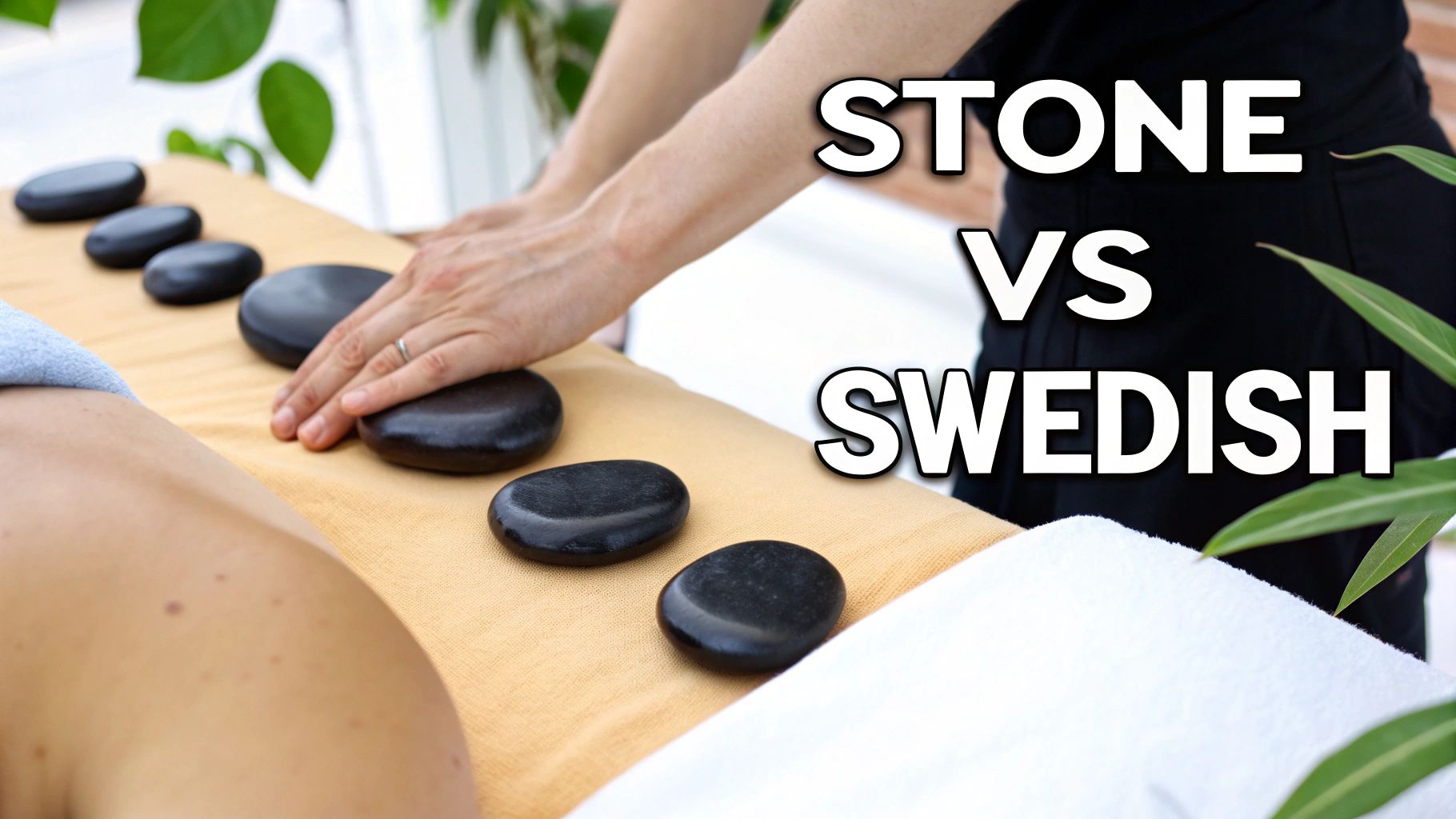
When you get down to it, the real difference between a hot stone massage and a Swedish massage isn't just about the tools—it's about the therapeutic results. Both can leave you feeling worlds better, but they get you there through very different means. To pick the right one, you have to match your personal wellness goals to what each massage truly excels at.
A Swedish massage is like a reset button for your central nervous system. Its magic lies in the rhythmic, flowing strokes that are designed to soothe and calm. The primary win here is a serious dent in your psychological stress. By encouraging your body to lower cortisol levels, that predictable, gentle pressure ushers in a profound sense of tranquility. It's my go-to recommendation for anyone feeling the effects of mental burnout or general anxiety.
A hot stone massage, on the other hand, brings in a powerful ally: heat. That thermal energy allows the therapist to achieve a much deeper physical release. The warmth from the stones sinks into muscle tissue far more effectively than hands alone, making it a superstar for tackling those stubborn, deep-seated knots and persistent stiffness that just won't seem to go away.
Stress Relief and Mental Relaxation
While both massages are fantastic for relaxation, they don't quite scratch the same itch. Think of a Swedish massage as a "mental vacation." Its entire focus on long, gliding strokes and gentle kneading is geared toward releasing stress trapped in the body, promoting a state of pure, unadulterated calm.
Hot stone massage delivers its relaxation through a completely different channel. The penetrating warmth is incredibly comforting, creating a cocoon-like effect that feels deeply grounding. For people who have a hard time "switching off" their brain, the focused sensation of the hot stones can be a powerful anchor, pulling their attention away from racing thoughts.
Key takeaway: If you’re looking for pure, nervous-system-soothing relaxation, Swedish massage usually wins. But for a feeling of deep, grounded comfort that melts away muscle tension at the same time, hot stone is the way to go.
Chronic Pain and Muscle Tension
This is where the two therapies really part ways. If you're struggling with persistent pain, especially from conditions like fibromyalgia or arthritis (always with a doctor's okay!), hot stone massage often has a distinct advantage. The targeted heat cranks up blood flow to sore spots, which helps dial down inflammation and ease discomfort more effectively.
A Swedish massage is certainly beneficial for the general muscle soreness and tension we all get from life. It’s great. However, it might not have the firepower to break down the dense adhesions and trigger points that are the root cause of chronic pain. A therapist can always apply more pressure, but without that preparatory heat, it can be less comfortable and, frankly, less effective for those deeply embedded issues.
| Benefit | Swedish Massage | Hot Stone Massage |
|---|---|---|
| Stress Relief | Top-tier for calming the nervous system and easing mental chatter. | Excellent for deep, comforting warmth and physical grounding. |
| Chronic Pain | Good for general soreness and milder, widespread pain. | Superior for targeted relief of deep knots and chronic conditions. |
| Flexibility | Improves flexibility by lengthening and relaxing surface muscles. | Enhances flexibility by warming connective tissues for a deeper stretch. |
| Sports Recovery | Ideal for flushing lactic acid and reducing post-workout soreness. | Better for addressing specific, deep muscle injuries or chronic tightness. |
Flexibility and Athletic Recovery
For athletes or really anyone looking to improve their range of motion, both massages bring something valuable to the table. A Swedish massage is fantastic for lengthening tight muscles and boosting circulation—both of which are critical for recovery and staying limber.
But a hot stone massage can take that a step further. By warming up the fascia and connective tissues, it makes the muscles much more pliable. This allows the therapist to work deeper and achieve a more lasting release of the tension that might be holding back your movement.
When it comes to athletic recovery, your choice really depends on the mission. Need a general recovery session to reduce soreness after a brutal workout? A Swedish massage is perfect. But if you’re dealing with a more specific problem, like a nagging tight hamstring or an old shoulder impingement, the focused heat of a hot stone massage can provide much more direct relief.
Athletes might also want to explore our guide comparing sports massage vs regular massage to find the absolute best fit for their training demands.
Hot Stone or Swedish? Making the Right Call
Deciding between a hot stone massage and a Swedish massage really boils down to what your body and mind are asking for at that moment. It's not about which one is "better" overall, but which one is right for you, right now.
Think of it this way: are you looking for a targeted strike against a stubborn knot, or do you need a full-body reset to quiet the noise? One provides deep, focused heat, while the other offers a sweeping sense of calm. Your body knows the answer; you just have to listen.
Choose Hot Stone for Deep, Stubborn Tension
If you carry your stress in specific spots—like those rock-hard knots in your shoulders from sitting at a desk all day—a hot stone massage is probably your best bet. This is where it truly shines. The penetrating warmth from the smooth basalt stones sinks deep into the muscle, loosening things up from the inside out. This allows your therapist to work more deeply and effectively without having to apply intense, sometimes uncomfortable, pressure.
Hot stone therapy is a fantastic choice for:
- Chronic Muscle Stiffness: Perfect for that lower back that always aches or those neck and shoulder muscles that feel permanently clenched.
- Pinpointed Pain Relief: When you can put a finger on a specific spot and say, "The problem is right here."
- Soothing Anxiety: The weight and warmth of the stones have a grounding effect that can be incredibly calming for a busy mind.
Go with Swedish for General Relaxation and Stress Relief
Feeling overwhelmed, a bit sensitive to touch, or just trying massage for the first time? The classic Swedish massage is your go-to. It’s the foundational massage for a reason. Its long, gliding strokes and gentle kneading are designed to soothe your entire nervous system and boost circulation from head to toe.
For anyone new to massage or simply seeking a mental escape, a Swedish massage is the gold standard. It’s less about attacking specific knots and more about melting away overall stress, leaving you with a sense of profound tranquility.
This style is ideal when you need:
- A Gentle Introduction: It’s the perfect first massage, helping you get comfortable with the process and pressure.
- Total Stress Decompression: The best choice for unwinding after a mentally draining week or project.
- Improved Circulation: The rhythmic, sweeping strokes are fantastic for getting your blood flowing and feeling refreshed.
Important Health Considerations Before You Book
While hot stone massage is wonderfully therapeutic, the addition of heat means it isn't for everyone. It’s absolutely essential to consider your health history, as applying direct heat can be risky for certain conditions.
You should avoid hot stone massage or speak with your doctor beforehand if you have any of the following:
- High Blood Pressure: The heat widens blood vessels, which can impact your blood pressure.
- Diabetes: Nerve damage (neuropathy) is a common complication that can impair your ability to feel heat, putting you at risk for burns.
- Pregnancy: While specialized prenatal massage is highly recommended, most therapists avoid applying direct, concentrated heat from stones.
- Varicose Veins: Heat can increase inflammation and discomfort in areas with varicose veins.
In any of these cases, a Swedish massage is almost always the safer, more comfortable option. The most important thing you can do is have an open conversation with your massage therapist. Being transparent about your health ensures they can tailor the session perfectly to you, so you can walk away feeling better, not worse.
What to Expect During Your Session
Walking into a massage room for the first time can feel a little mysterious, but knowing what’s ahead makes all the difference. No matter if you've chosen a hot stone or Swedish massage, your appointment will always start with a quick, confidential chat with your therapist. This is your chance to talk about your goals, point out any sore spots, and mention any health conditions.
Once you’ve talked it over, your therapist will step out, giving you privacy to undress to your comfort level and get settled on the table under a sheet. Professional draping is standard practice, meaning only the part of your body being worked on will be uncovered. Your comfort is the top priority, so don't be shy about speaking up if you need the pressure adjusted, the music changed, or the room temperature tweaked.
The Swedish Massage Experience
For a classic Swedish massage, the therapist will apply oil or lotion to your skin. This allows their hands to move in long, smooth, gliding strokes—a technique called effleurage that warms up your muscles.
You'll then feel a sequence of more targeted techniques, like the kneading and squeezing of petrissage, designed to work out knots and tension. The entire experience is defined by the therapist's skilled, hands-on approach, creating a rhythmic and incredibly relaxing flow.
The Hot Stone Massage Experience
A hot stone massage brings heat into the equation. Your therapist will use smooth, heated basalt stones in two ways: placing them on specific points of your body and using them as extensions of their own hands to massage your muscles.
The defining sensation is the deep, penetrating warmth of the stones as they glide over your body, combined with the therapist's pressure. It's a truly unique feeling.
The magic of a hot stone massage is the dual sensation of weight and heat. The stones are heated to a precise temperature, usually between 120-130°F, which is hot enough to melt away tension but never uncomfortably so.
Therapists are experts at managing the heat, always testing the stones themselves before placing them on your skin. This allows for deep muscle relaxation with less intense pressure, as the heat does a lot of the initial work to soften the tissue. This is a huge differentiator when comparing hot stone massage vs Swedish massage.
Because of its ability to provide targeted relief, hot stone is a fantastic option for customized wellness plans. If you're an athlete, understanding how different therapies can accelerate your recovery is key. You can dive deeper into this topic in our guide on massage for athletes. Ultimately, open communication ensures your session is exactly what you need, leaving you feeling comfortable, refreshed, and completely relaxed.