
How to Treat Tennis Elbow Fast and Effectively
When you first feel that sharp, persistent pain on the outside of your elbow, your gut reaction might be to ignore it and push through. Don't. That pain is your body's alarm bell, signaling that the tendons connecting your forearm muscles to your elbow are inflamed, overworked, and need a break.
This isn’t just a "tennis" problem, despite the name. I’ve seen it in office workers from constant typing, gardeners after a long weekend, and even new parents from lifting a baby. The first 48 to 72 hours are absolutely critical—what you do right away will set the tone for your entire recovery.
The First-Aid Plan: Immediate Steps for Relief
Your top priority is to calm the inflammation. Think of it as putting out a small fire before it spreads. This is where the time-tested R.I.C.E. method comes into play. It’s not a permanent fix, but it's the essential first response to manage the acute pain and stop the tendon damage from getting worse.
Here’s exactly what you need to do:
- Rest: This is non-negotiable. Stop doing the activity that hurts. Whether it’s typing, lifting, or gripping, give that arm a complete break. Continuing to push it will only deepen the micro-tears in the tendon.
- Ice: Grab a cold pack or even a bag of frozen peas, wrap it in a light towel, and apply it to the most painful spot for 15-20 minutes at a time. Do this several times throughout the day, especially after any accidental strain. The cold helps constrict blood vessels, which is fantastic for reducing swelling and dulling the pain.
- Compression: A simple elastic compression bandage can be a huge help. Wrap it snugly—but not too tightly—around your forearm, starting just below the elbow. This provides gentle support and helps prevent fluid from building up. If your hand starts to tingle or feel cold, it's too tight.
- Elevation: Whenever you're sitting or resting, try to prop your arm up on pillows so your elbow is above the level of your heart. It sounds simple, but using gravity to your advantage helps drain excess fluid and further reduces swelling.
This image lays out the journey from that initial twinge of pain to a structured recovery plan.
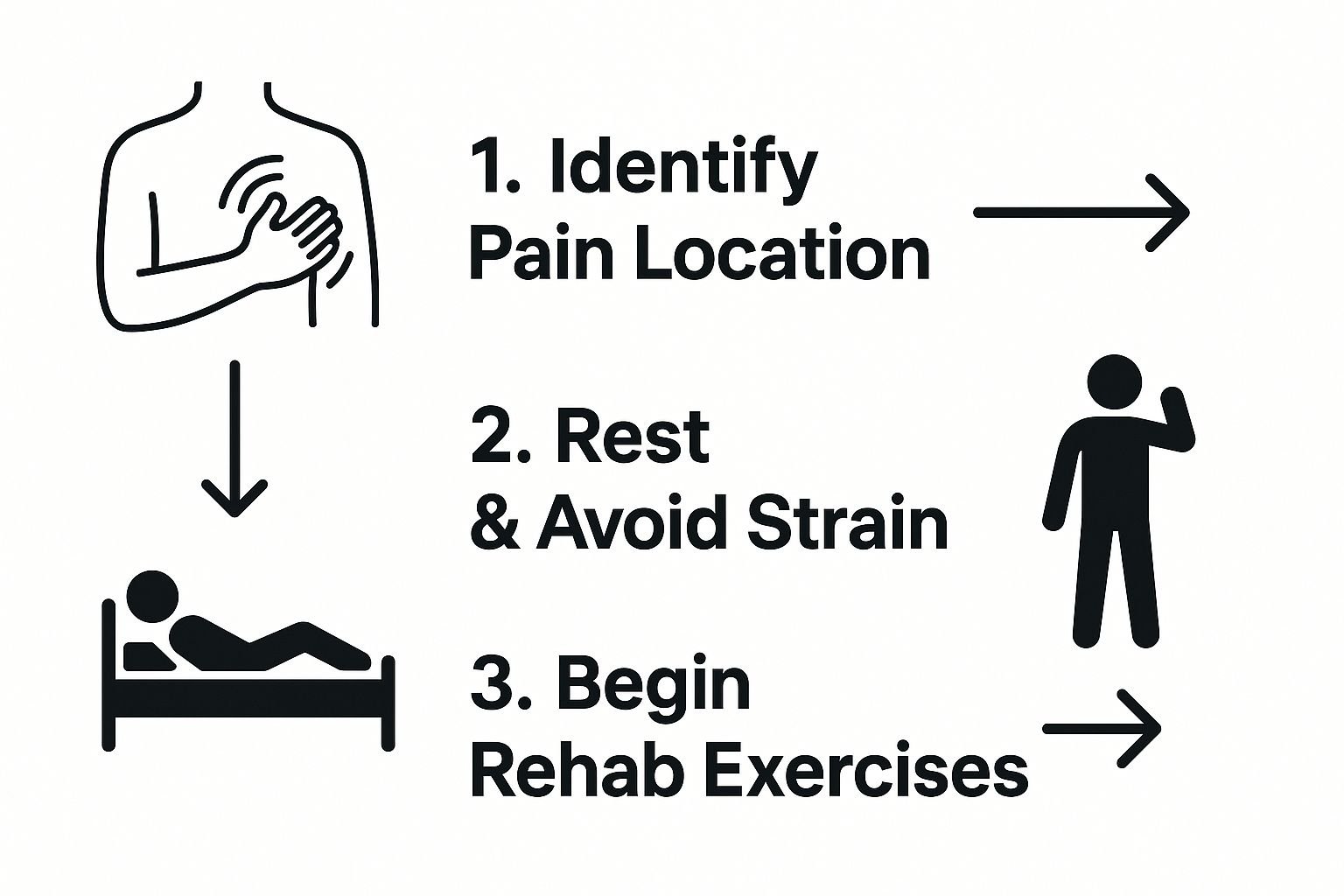
It’s a great visual reminder that healing happens in stages. You have to patiently work through the initial rest phase before moving on to rehabilitation.
Quick Actions vs. Lasting Recovery
It's easy to confuse immediate relief with a long-term solution. The R.I.C.E. method is for damage control, while true recovery involves strengthening and prevention. This table breaks down the difference.
| Care Strategy | Primary Goal | Key Actions |
|---|---|---|
| Quick Actions | Reduce acute pain and inflammation | Rest, Ice, Compression, Elevation |
| Lasting Recovery | Heal tendon and prevent re-injury | Stretching, Strengthening exercises, Massage, Form correction |
Think of it this way: Quick actions stop the problem from getting worse. Lasting recovery makes sure it doesn't happen again.
Setting Realistic Expectations for Healing
It's crucial to understand that tennis elbow (medically, lateral epicondylitis) takes time to heal. These initial conservative steps are the cornerstone of treatment, but you need to be patient.
According to an in-depth medical review of treatment strategies, most people see significant improvement over several months, with many feeling better within 12 months by sticking to a consistent care plan. The initial phase is all about calming things down so your body can actually start the repair process.
My Key Advice: For the first few days, your only job is damage control. Focus entirely on rest and ice. Resist the urge to start stretching or strengthening until that initial, sharp inflammation has settled.
You wouldn't try to repave a road with cars still driving on it. First, you have to put up the "road closed" signs. R.I.C.E. is your "road closed" sign, giving your tendon the protected space it needs to begin healing. A few days of disciplined rest now can save you months of nagging pain down the line.
Proven At-Home Remedies to Manage Daily Pain
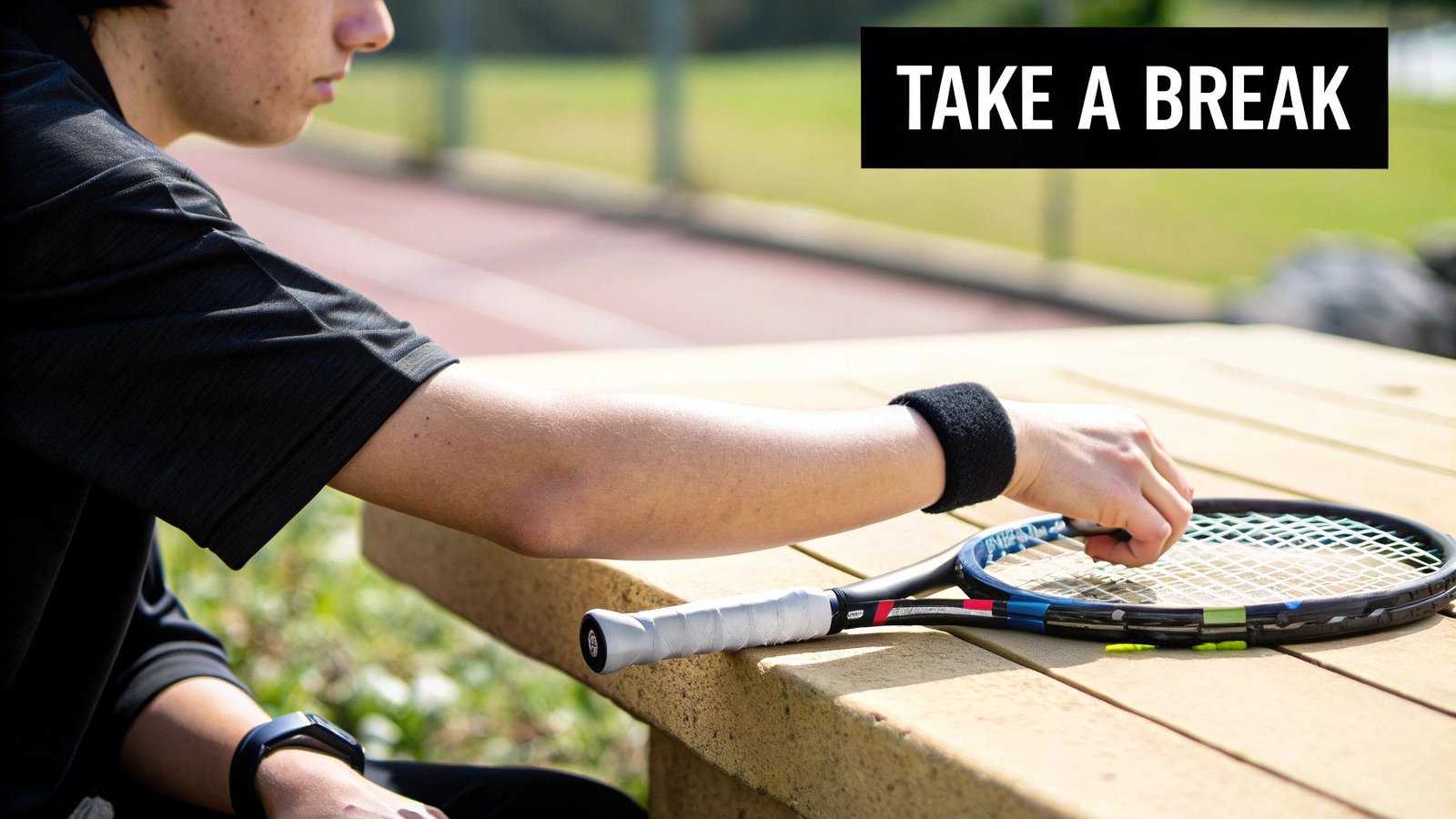
Once you’ve settled down the initial, angry inflammation with rest and ice, it's time to shift gears. The next phase is all about smart, daily management—building a personal toolkit of at-home strategies to keep that dull ache from ruining your day. Learning how to treat tennis elbow isn't a one-and-done deal; it's about weaving these simple habits into your routine.
It’s not just what you do, but when you do it. Take the classic heat vs. ice debate. It’s not a simple choice, because they serve completely different purposes. Using them strategically can make a world of difference in your comfort and long-term recovery. This is where you learn to manage your symptoms so your body can actually heal.
The Strategic Use of Ice and Heat
Think of ice and heat as two different specialists for two different problems. Getting this right is key to managing your elbow pain from one day to the next.
- Ice After Activity: Always, always use ice after any activity that strains your forearm. This could be a workout, a few hours of gardening, or even a long day at the keyboard. Applying a cold pack for 15 minutes calms down any new inflammation and tells that angry tendon to settle down before it flares up.
- Heat Before Stretching: Before you start any gentle stretching or strengthening, grab a heating pad. Applying heat for 15-20 minutes boosts blood flow to the forearm, helping to relax those tight, overworked muscles. This makes the tissue more pliable, so you get a much better, safer stretch without causing more irritation.
A crucial rule of thumb: never apply heat to an injury that's actively swollen and throbbing. You'll just make the inflammation worse. Save heat for those moments when your muscles just feel stiff and need to loosen up.
Topical Treatments for Targeted Relief
While popping an ibuprofen can take the edge off, it affects your whole body. Topical anti-inflammatory gels or creams are a much more direct approach, delivering relief right where you need it. This focus helps minimize the risk of the systemic side effects that can come with oral pain relievers.
In fact, clinical guidelines often suggest a "watchful waiting" approach, combined with the short-term use of these topicals. Research gives high marks to topical NSAIDs for short-term pain relief, making them a solid part of any conservative treatment plan.
Pro Tip: When you apply a topical gel, don't just slather it on. Gently massage it into that tender spot on the outside of your elbow until it’s fully absorbed. This not only helps the medicine work its way in but also doubles as a mini-massage to ease muscle tension.
Combining these remedies can really amplify your results. If you're dealing with all-over muscle soreness, you might also want to check out our guide on the benefits of massage for muscle pain to add another layer to your recovery plan.
The Game-Changing Role of a Forearm Brace
A simple forearm brace or strap might just be the most valuable tool in your arsenal. It’s not about immobilizing your arm; it works by applying targeted pressure just below your elbow.
This pressure cleverly changes the angle at which your tendon pulls on the bone, redirecting the stressful forces away from the inflamed area. Think of it as a "dummy tendon" that takes the hit for you during activities like gripping, lifting, or typing.
Here’s how to get the most out of it:
- Wear it during aggravating activities. I found it was a lifesaver when working on my laptop or doing chores like carrying groceries.
- Get the position right. It should be snug, but not cutting off your circulation. Place it about one finger-width below the most painful point on your elbow.
- Don't wear it 24/7. Your muscles still need to do their job to stay strong. Use the brace for support during specific tasks, but take it off when you're resting.
This simple device gives the extensor carpi radialis brevis (ECRB) tendon—the main culprit in tennis elbow—a chance to rest even while you're moving. That’s the secret to treating tennis elbow without having to put your life on hold.
Essential Stretches and Exercises for Recovery

Once you’ve gotten the initial inflammation and pain under control, it’s time to shift gears. This is where the real work—and the real healing—begins. We need to focus on rebuilding strength and getting flexibility back into those overworked forearm tendons through active recovery.
This isn’t about jumping straight back into your old routine. Instead, think of it as a careful, deliberate process of re-introducing movement. We'll start with gentle stretches to ease the tension and then gradually add some light resistance work. The goal is to remodel and strengthen the injured tissue so it can handle daily demands again.
From my own experience with nagging tennis elbow, this was the phase that made all the difference. The most important rule? Always listen to your body. A little discomfort is okay, but sharp pain is your signal to stop.
Gentle Stretches to Begin Your Healing
First things first: stretching. The extensor muscles along the top of your forearm have become incredibly tight from overuse, and our initial job is to gently lengthen them. The best place to start is with the classic wrist extensor stretch. It’s simple, you don’t need any equipment, and you can do it just about anywhere.
Take a look at the image above—notice how the arm is held straight while the other hand gently guides the wrist downward. This exact position targets those forearm extensor muscles that attach right at that painful spot on your elbow.
Here’s how to do it right:
- Hold your affected arm straight out, palm facing the floor.
- Let your wrist bend down so your fingers point toward the ground.
- With your other hand, gently pull the stretching hand toward you.
- You’re looking for a mild to moderate pull on top of your forearm. If it hurts, ease up.
- Hold the stretch for 20-30 seconds, then release. Repeat this 3-5 times.
Try to work this stretch into your day several times, especially before you do anything that might involve gripping or lifting. It's the perfect warm-up for the strengthening work we'll get into next.
A Crucial Insight: I learned the hard way that consistency beats intensity. Doing this gentle stretch for a few minutes multiple times a day brought far more relief than one long, aggressive session that just left my elbow feeling angry and irritated.
Progressing to Strength-Building Exercises
Once stretching feels comfortable and that initial, sharp pain has faded, it's time to start building back some strength. You have to start small here. We’re not trying to become bodybuilders; we're trying to encourage the tendon to heal in a stronger, more resilient way. Weak grip strength is a hallmark of tennis elbow, so restoring it is a top priority.
Here are a couple of my go-to exercises that are incredibly effective.
1. Reverse Wrist Curls (with a Soup Can)
This move directly works the extensor muscles. You don't need a fancy dumbbell—a can of soup or a small water bottle provides the perfect amount of light resistance to start.
- Sit down and rest your forearm on your thigh, with your palm facing down.
- Hold the can and let your wrist hang just past your knee.
- Slowly lower the can as far as is comfortable, then just as slowly, raise it back up.
- The key is a smooth, controlled motion. Aim for 3 sets of 10-15 repetitions.
If you feel any sharp pain, stop immediately. It just means your elbow needs a few more days of stretching before it's ready for this.
2. The Tyler Twist (with a FlexBar)
This exercise is famous in the rehab world for a reason. Using a simple tool called a FlexBar, it creates an "eccentric contraction," which means the muscle gets longer while it's under tension. This specific type of movement is a powerhouse for healing stubborn tendon injuries.
- Hold the FlexBar vertically with the hand of your sore arm, wrist bent backward (extended).
- Grab the top of the bar with your good hand, palm facing away from you.
- Twist the bar by turning your top hand toward you.
- Keeping the twist, extend both arms straight out in front of you.
- Now for the magic: slowly untwist the bar by letting the wrist of your injured arm flex forward. This controlled release is the most important part.
- Shoot for 3 sets of 15 repetitions each day.
This unique movement was a complete game-changer for my own recovery. It targets the tendon in a way that truly promotes healing.
Finally, while these specific moves are crucial, don't forget the bigger picture. Maintaining overall fitness is key, as a healthy body is better at healing itself. You can find some great general exercise guidance to help you stay active without making your elbow worse. The trick is to keep moving without aggravating the injury.
When to Consider Professional Medical Treatments
Sometimes, despite your best efforts with ice, stretches, and a brace, the stubborn pain of tennis elbow just refuses to back down. If you've tried all the home remedies and the ache is still hanging around after a few weeks, don't see it as a failure. Think of it as a clear signal from your body that it’s time to call in the professionals.
Walking into a doctor's office or a physical therapy clinic shouldn’t feel intimidating. It’s simply upgrading your recovery toolkit. You're moving beyond the basics to tap into specialized strategies that can finally break the pain cycle and kickstart real, lasting healing. Knowing what to expect empowers you to have a productive conversation and choose the right path forward.
What to Expect from Physical Therapy
For most people, physical therapy is one of the most effective routes to recovery. This is so much more than just being handed a worksheet of exercises. A good physical therapist is like a biomechanics detective, carefully analyzing your movements, posture, and strength to uncover the root cause of your pain.
A typical session is a hands-on, dynamic process that often includes:
- Manual Therapy: This is where the therapist gets to work directly on the problem area. They might use specialized massage techniques to break down tough scar tissue in the tendon or gentle joint mobilizations to restore full movement in your wrist and elbow. It’s a level of targeted relief you just can’t achieve on your own.
- A Tailored Exercise Plan: They’ll do more than just show you an exercise; they'll ensure you’re doing it perfectly. From eccentric movements like the Tyler Twist to strengthening exercises for your shoulder and wrist, proper form is everything.
- Smarter Movement Strategies: Your therapist will help you spot the everyday habits—like how you grip your phone or position your arm at your desk—that are secretly making things worse. Then, they’ll teach you better ways to move.
For many athletes and active individuals, targeted massage is a huge part of the puzzle. To see how it fits into a broader recovery plan, check out our guide on massage for sports injuries.
A Clear Look at Corticosteroid Injections
If your pain is intense and unrelenting, your doctor might bring up the option of a corticosteroid injection. These shots deliver a powerful anti-inflammatory right to the site of the injury, and the relief can be fast and dramatic. For someone sidelined by pain, it can feel like a lifesaver.
But it’s important to have an honest conversation about the bigger picture. The short-term relief is undeniable, but the evidence for long-term healing is a bit more complicated. Injections are fantastic at calming down inflammation, but they don't actually fix the underlying tendon damage.
Research has shown that while injections can be a useful tool, they might not be the best long-term play. One study found that while 69% of patients did well with injections within a year, physical therapy had a much higher success rate at 91%. Interestingly, even a "wait and see" approach had an 83% success rate, highlighting the body's incredible ability to heal. You can dig into the data in this comparative study on tennis elbow treatments.
This tells us that while a shot can provide a much-needed window of relief, an active approach like physical therapy is often the key to a more sustainable, long-term fix.
Exploring Newer Treatment Options
What happens when even the standard treatments don't cut it? Fortunately, medical science is always evolving, offering new hope for those stubborn cases of tennis elbow. If your recovery has stalled, your doctor might discuss a few of these newer, more advanced options.
Two treatments that are gaining a lot of ground are:
- Platelet-Rich Plasma (PRP) Injections: This procedure uses your body's own healing power. A small amount of your blood is drawn and spun in a centrifuge to concentrate the platelets, which are packed with natural growth factors. This powerful solution is then injected back into the damaged tendon to stimulate a robust healing response.
- Extracorporeal Shockwave Therapy (ESWT): This is a non-invasive treatment where a special device sends high-energy acoustic waves to the injured tissue. It sounds intense, but the goal is to create micro-trauma that essentially jump-starts your body’s repair mechanisms, helping to reduce pain and improve function over time.
These approaches mark a shift toward regenerative medicine—focusing on actually repairing the tissue instead of just managing the symptoms. By understanding all your options, from physical therapy to these newer techniques, you can work with your doctor to build the best plan to finally put tennis elbow behind you.
Lifestyle Adjustments to Prevent Future Flare-Ups
 Getting rid of the immediate pain is one thing, but true recovery means making sure it doesn't come back. Once you've moved past the acute stage, your focus needs to shift from treatment to prevention. This is all about making small, sustainable changes to your daily life that will have a huge impact on your elbow's long-term health.
This isn’t about some massive life overhaul. You don't have to quit your job or give up the sports you love. It’s simply about learning to move smarter and protect your body from unnecessary strain.
Reinforce Your Workspace Ergonomics
For so many of us, the desk is ground zero for repetitive strain. Each mouse click and keystroke can contribute to the problem, so if your workspace isn't set up correctly, it could be the very reason your tennis elbow keeps acting up. Creating an ergonomic setup is one of the most powerful preventative moves you can make.
I’ve personally used these adjustments to escape the daily strain of a desk job:
- Mouse and Keyboard Position: Your keyboard and mouse should be positioned so your forearms are parallel to the floor. You want to avoid bending your wrists up or down. A vertical mouse was a game-changer for me, as it keeps your wrist in a more neutral "handshake" position.
- Chair Height and Armrests: Adjust your chair so your feet can rest flat on the floor with your knees at a 90-degree angle. The armrests should gently support your elbows, taking the load off your shoulders without making you hunch.
These simple fixes drastically reduce the constant tension on your forearm extensors—the exact muscles at the heart of tennis elbow. For a more comprehensive, full-body approach, check out our guide on https://blog.lamoondayspa.com/preventing-repetitive-strain-injuries/ for more detailed strategies.
Master Proper Form in Everyday Activities
Prevention doesn't stop when you leave the office. The way you lift groceries, work in the garden, or even swing a racket plays a massive role in keeping your elbows healthy. It all comes down to being mindful of your body mechanics, whatever you're doing.
Think about your daily tasks and run through this mental checklist:
- Lifting: When you pick something up, whether it's a bag of dog food or a small child, keep the object close to your body. Let your larger bicep muscles do the heavy lifting instead of extending your arm and forcing your smaller forearm muscles to take the brunt of the weight.
- Gardening or Manual Work: Look for tools with thicker, padded grips. This reduces how tightly you need to squeeze. Also, remember to take frequent breaks and switch hands to give each side a rest.
- Sports: If you’re a racket sports player, it's worth getting a pro to check your form. A simple issue like an incorrect grip size or a flawed backhand technique can place tremendous stress right on your elbow.
Key Takeaway: The goal is to distribute force across larger, stronger muscle groups. Don't let it all funnel into the delicate tendons of your elbow. This principle is your secret weapon for nearly any physical activity.
The Importance of Warm-Ups and Overall Health
Never, ever jump into an activity cold, especially one that’s given you trouble before. A simple 5-minute warm-up is your best line of defense against re-injury. Before you start gardening or head to the tennis court, do some light cardio, like jogging in place, to get your blood flowing. Follow that up with the same gentle wrist stretches you used during your recovery.
Finally, don't underestimate the power of your general well-being. Your body’s ability to repair itself is directly tied to your overall health. Things like proper hydration and a balanced diet provide the essential building blocks your body needs to maintain strong, resilient tendons. Getting enough rest is also non-negotiable; understanding the impact of sleep on overall health is a critical piece of the healing puzzle. These foundational habits are the bedrock of lasting prevention.
Your Top Questions About Tennis Elbow, Answered
When you're dealing with a nagging injury like tennis elbow, it's natural to have a lot of questions. Getting clear, practical answers can give you peace of mind and, more importantly, help you stick to a recovery plan that actually works. Let's tackle some of the most common questions I hear from people trying to heal their elbow pain.
How Long Does Tennis Elbow Really Take to Heal?
This is always the first thing people ask, and the honest answer is: it depends. With a consistent at-home plan—I'm talking rest, smart icing, and the right gentle exercises—most people start feeling a real difference in about 4 to 6 weeks.
But getting back to 100%, especially if you've been ignoring the pain for a while, can take a lot longer, sometimes anywhere from 6 to 12 months. Patience and consistency are everything. The biggest mistake I see is people jumping back into their old activities the second the pain subsides. That's a surefire way to end up right back where you started.
My Advice: Think of healing in phases, not as a single finish line. Your first job is to calm the pain down. The second is to rebuild strength and flexibility. If you respect each phase, you'll actually get better faster in the long run.
When Should I Give Up and See a Doctor for Elbow Pain?
While you can manage most cases of tennis elbow at home, there are definitely times when you need a professional opinion. It’s time to book an appointment with a doctor if you notice any of these red flags:
- The pain is severe and just not getting better with basic home care.
- You’re feeling numbness or a constant tingling in your hand or arm.
- You’ve been doing all the right things for 2-3 weeks with zero improvement.
- You can't do simple things like hold a coffee cup or open a door without pain.
A proper diagnosis is critical. A doctor can rule out other issues that can masquerade as tennis elbow, like a pinched nerve in your neck or even arthritis. This is also your gateway to proven treatments like physical therapy, which has an incredibly high success rate for this condition.
Can I Still Work Out with Tennis Elbow?
Yes, absolutely—but you have to be smart about it. The golden rule is simple: if it causes that specific, sharp pain in your elbow, don't do it. Targeted stretches and strengthening exercises for your forearm aren't just okay; they're a vital part of your recovery.
As for your general fitness, this is a great chance to modify your routine. Focus on things that don't strain your wrists and forearms. Some great options include:
- Running or hitting the elliptical
- Cycling (just be sure to keep a relaxed grip on the handlebars)
- Lower body days with squats and lunges
- Plenty of core work
When you do get back to your sport or lifting weights, ease into it. Start with shorter sessions and lighter loads. Most importantly, use this as an opportunity to really look at your form or technique. Bad form is often the root cause of the injury, and fixing it is the best way to keep it from coming back.
Is Heat or Ice Better for Tennis Elbow?
This is a fantastic question because the answer isn't one or the other—it's both. The key is knowing when to use each one. They play very different roles in your recovery.
Reach for Ice When:
- The pain is new and sharp. For the first few days of an injury or right after a flare-up, ice is your go-to.
- Right after an activity. Spent the afternoon gardening? Played a set of tennis? Ice your elbow for 15 minutes as soon as you're done to shut down inflammation before it starts.
- You can see swelling. Ice helps constrict blood vessels, which reduces swelling and helps numb the pain.
Use Heat When:
- You're dealing with chronic stiffness. For that dull, lingering ache in a tendon that isn't actively swollen, a little heat can feel amazing.
- Before you stretch or exercise. Applying a warm compress for 15-20 minutes beforehand will boost blood flow and loosen up tight muscles, getting them ready for gentle movement.
Just remember never to put heat on a fresh, swollen injury—it will only make things worse. A simple way to think about it is: Ice for acute pain and swelling, heat for chronic stiffness and warm-ups.
Dealing with persistent soreness can be frustrating, but the right therapeutic approach can make a world of difference. At La Moon Massage and Facial, we specialize in massage therapy designed to address muscle tightness and promote recovery for athletes and anyone dealing with bodily aches. Discover how our targeted wellness treatments can support your healing journey by visiting us at La Moon Day Spa.
← Back to all articles