
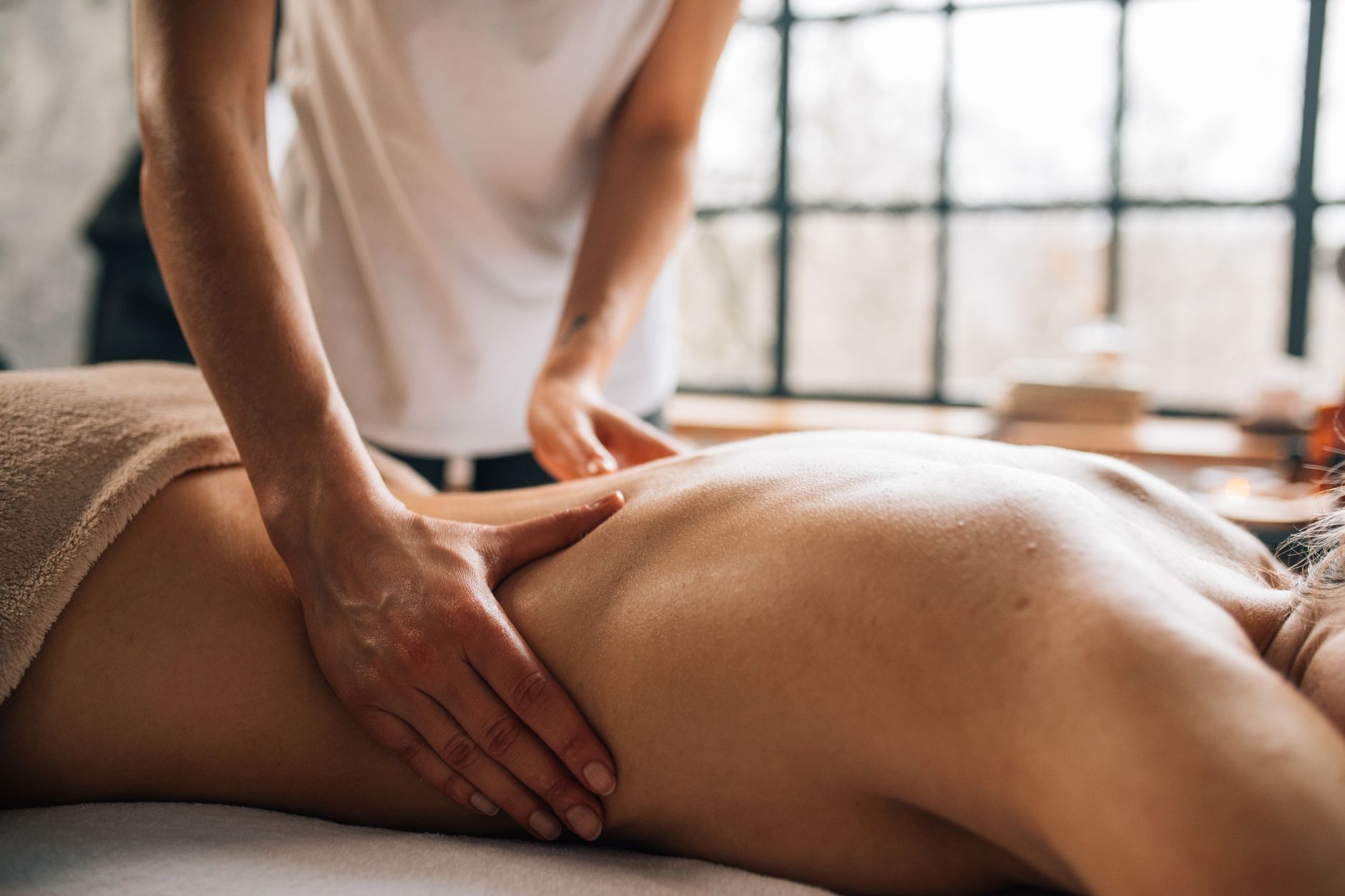
Swedish and deep tissue massage differ mainly in pressure and purpose. Swedish uses lighter, flowing strokes for relaxation and stress relief. Deep tissue applies firmer, more focused pressure to reach chronic tension and tight spots in deeper muscle layers.
Many people want to book the right massage but aren't sure which one matches what their body needs. We'll walk you through what sets them apart so you can book with confidence.
Pressure: The Most Noticeable Difference
Pressure is what you'll feel first.
Lighter massage uses gentle to moderate pressure. Your therapist works with long, gliding strokes that feel smooth and rhythmic. The touch stays gentle enough that most people drift into deep relaxation or even fall asleep on the table.
Deep tissue massage uses firm, sustained pressure. Your therapist moves more slowly and deliberately, working into specific tight areas. They might use their forearms, knuckles, or elbows to reach deeper muscle layers. It's more intense. Some spots might feel uncomfortable while your therapist works them, though it shouldn't cross into actual pain.
Both types should always feel manageable. If any pressure feels like too much, tell your therapist right away. They can adjust on the spot.
What Each Massage Technique Actually Does
Swedish massage combines five main techniques: long gliding strokes (effleurage), kneading (petrissage), rhythmic tapping, friction, and gentle stretching. Your therapist works over your whole body in a flowing sequence. The goal is to relax your nervous system, ease surface muscle tension, and help you decompress.
Deep tissue massage uses slower, more concentrated strokes. Your therapist applies pressure across the grain of your muscles to address chronic patterns of tension. They might hold pressure on a tight spot (trigger point work) or use friction to work on adhesions in the connective tissue. The work is more specific and localized.
The techniques target the same muscles, just at different depths and with different intent.
What the Session Actually Feels Like
During Swedish massage, most clients feel their mind quiet down within the first ten minutes. Your muscles gradually soften. The rhythmic strokes have an almost hypnotic quality. Many people lose track of time. The room temperature feels comfortable, the music fades into background, and your breathing naturally slows and deepens.
During deep tissue massage, you stay more aware of what's happening. When your therapist finds a tight spot, you'll feel it. That sensation might range from "good hurt" (like stretching a stiff muscle) to temporarily uncomfortable. You might hold your breath or tense up instinctively. Your therapist will often remind you to breathe through it. As the knot releases, you typically feel relief.
The intensity varies throughout the session. Not every stroke is deep. Your therapist alternates between deeper work and lighter strokes to give your muscles recovery time.
Who Benefits Most from Each Type
Swedish massage works well if you:
- Want full-body relaxation and stress relief
- Are new to massage or haven't had one in a while
- Have general muscle tension from sitting at a desk or daily stress
- Prefer gentler touch
- Want to improve sleep or lower your stress level
- Are recovering from illness and need gentle bodywork
Deep tissue massage works well if you:
- Have chronic tight spots that won't release with stretching alone
- Deal with persistent lower back, neck, or shoulder tension
- Play sports or work out regularly and need recovery work
- Have limited range of motion from muscle tightness
- Feel like lighter massage just doesn't reach the problem
- Want targeted work on specific areas more than whole-body relaxation
If you have any injuries, chronic pain conditions, or you're pregnant, check with your doctor before booking deep tissue massage. Some conditions respond better to gentler approaches.
How Your Body Responds Afterward
After Swedish massage, most clients feel calm and loose. You might feel a little sleepy. Any soreness is rare and mild if it happens at all.
After deeper work, your muscles were worked more intensively, similar to how you might feel after a challenging workout. The soreness typically fades within 24 to 72 hours. Some clients feel immediate relief, while others notice the biggest improvement a few days later as inflammation settles.
Move gently the rest of the day after deep tissue work. A warm bath or light stretching can help. Skip intense exercise for a day or two.
What to Tell Your Therapist Before You Start
Communication matters more than which massage you book. Before your session starts, mention:
- Areas that feel tight, painful, or limited
- Whether you prefer lighter or firmer pressure overall
- Any injuries, surgeries, or medical conditions
- If you're pregnant
- Whether you tend to bruise easily
During the massage, speak up if pressure feels too light or too intense. Good? Tell them. Too much? Say so immediately. Good therapists want you comfortable, not gritting your teeth.
Your therapist can blend techniques, too. You might get Swedish strokes over most of your body with deeper work on your shoulders and lower back. Most therapists customize based on what you need.
Practical Details for Booking
Both massage types typically run 60 or 90 minutes. Either length works, though 90 minutes gives your therapist more time for thorough work, especially with deep tissue.
You'll undress to your comfort level and lie on a padded table under a sheet. Your therapist only uncovers the area they're working on. For both Swedish and deep tissue, we use oil or lotion so strokes glide smoothly.
Arrive clean and fresh if possible. Many people come to massage appointments straight from work. A shower before your massage is appreciated if possible but not required.
You can learn more about what to expect in our complete guide to massage therapy in Katy and West Houston.
Can You Switch During Your Appointment?
Yes. If you booked deep tissue but the pressure feels like too much, your therapist can lighten up. If you booked Swedish but want more work on a tight spot, they can apply deeper pressure there. The label matters less than getting what your body needs right now.
Some days you need gentle relaxation. Other days you need someone to dig into that knot under your shoulder blade. Your needs change, and your massage can change with them.
How Often Should You Get Each Type?
For Swedish massage, whenever you need stress relief. Once a month works well for general wellness. Some clients come every week during high-stress periods. Others come a few times a year.
For deep tissue, spacing matters more. Your muscles need recovery time between sessions. Every two to four weeks typically works well for maintenance. If you're working on a chronic problem, your therapist might suggest weekly sessions for a few weeks, then taper to less frequent visits as things improve.
Listen to your body. If you're still sore from your last deep tissue massage, wait a bit longer before the next one.
Making Your Decision
Start here: What does your body need most right now?
If your answer is "I need to relax" or "I'm stressed and my whole body feels tense," Swedish massage is probably your best fit. If your answer is "I have this knot that won't go away" or "My shoulders are so tight I can barely turn my head," deep tissue makes more sense.
Not sure? Book a Swedish massage and tell your therapist about any problem spots. They can adjust pressure where you need it. You'll get a feel for different pressure levels and can make a more informed choice next time.
Both types of massage offer real benefits. Neither one is universally "better." It depends entirely on your goals, your body's current state, and your comfort with pressure.
Booking Your Massage
La Moon Massage and Facial Spa in West Houston offers deep tissue massage, along with Swedish, Thai, lymphatic, prenatal, and couples massage. You can see all our massage and facial services and what each one includes.
La Moon is open seven days a week from 9 AM to 9 PM. Book online at booking.lamoondayspa.com or call (346) 258-5588. When you arrive, let your therapist know about your needs and preferences so they can tailor the session to you.
Your first massage doesn't have to be complicated. Share what you're hoping to feel afterward, and your therapist can work with you to get there.
Frequently asked questions
What feels better, a Swedish massage or deep tissue massage?
Swedish feels gentler and more soothing throughout the session. Deep tissue can feel intense and sometimes uncomfortable during work on tight spots, though many clients find the release of tension satisfying. Your comfort matters most, so you can always ask your therapist to adjust pressure.
Does a deep tissue massage get knots out?
Yes, deep tissue massage can work out knots (areas of muscle tension). Your therapist uses slow, focused pressure to release those tight spots. One session helps, but chronic knots often need a few visits to fully resolve.
Is a deep tissue massage actually good for you?
Deep tissue massage can help with chronic muscle tension, limited range of motion, and persistent tightness. Many clients notice improvement in long-standing problem areas. If you have any injuries or medical conditions, check with your doctor first.
How do I know if I should get a deep tissue massage?
Consider deep tissue if you have chronic tight muscles, persistent knots, limited flexibility, or you play sports. If you want full-body relaxation or you're new to massage, Swedish is usually the better starting point. You can always adjust during your session.
Part of our guide: Complete Guide to Massage Therapy: What You Need to Know